Hashing
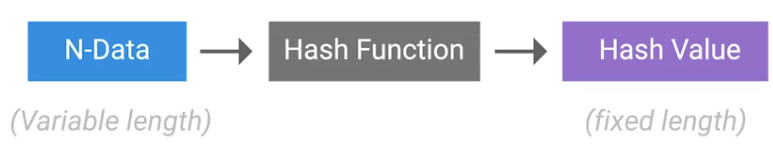
Hashing (Hash function): A type of function or operation that takes in an arbitrary data input and maps it to an output of a fixed size, called a hash or a digest
- The output size is usually specified in bits of data and is often included in the hashing function name.
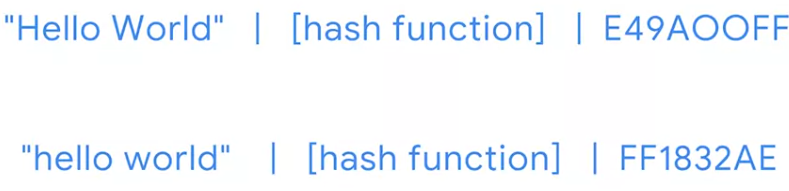
- What this means exactly is that you feed in any amount of data into a hash function and the resulting output will always be the same size, but the output should be unique to the input, such that two different inputs should never yield the same output
 Hashing can also be used to identify duplicate datasets and databases or archives to speed up searching of tables or to remove duplicate data to save space
Cryptographic hashing: It is distinctly different from encryption because cryptographic hash functions should be one directional
- used for various applications like authentication, message integrity, fingerprinting, data corruption detection, and digital signatures
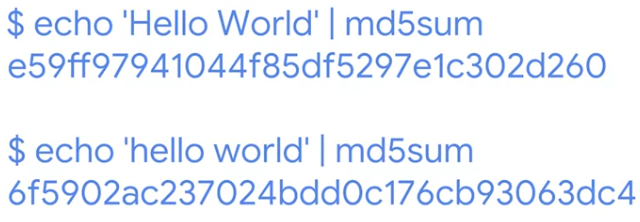
- The ideal cryptographic hash function should be deterministic, meaning that the same input value should always return the same hash value.
- The function should be quick to compute and be efficient, it should be infeasible to reverse the function and recover the plain text from the hash digest.
- A small change in the input should result in a change in the output so that there is no correlation between the change in the input and the resulting change in the output.
- Finally, the function should not allow for Hash collisions: Two different inputs mapping to the same output
- Cryptographic hash functions are very similar to symmetric key block ciphers in that they operate on blocks of data.