TCP Segment
made up of a TCP header and a data section
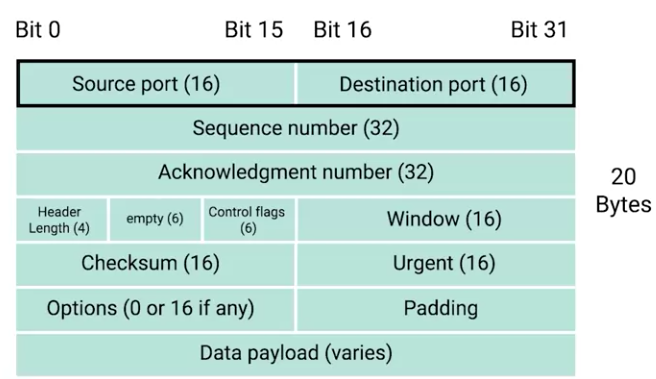
Destination Port - port of the service the traffic is intended for
Source Port - high-numbered port chosen from a special section of ports known as ephemeral ports
- required to keep outgoing connections separate
- necessary for when web server replies, the computer making the original request can send this data to the program that was actually requesting it
Sequence Number - 32-bit number used to keep track of where in a sequence of TCP segments this one is expected to be
Acknowledgment Number - number of the next expected segment
Data Offset Field - 4-bit number that communicates how long the TCP header for this segment is
- this is so receiving network understands where the actual data payload begins
TCP Window or Checksum - specifies the range of sequence numbers that might be sent before an acknowledgement is required
Urgent Pointer Field - used in conjunction with one of the TCP control flags to point out particular segments that might be more important than others
Options Field - it is sometimes used for more complicated flow control protocols