What is Active Directory
Active directory (AD): The Microsoft alternative to directory services that offers customization and added features for the Windows platform
Group policy objects (GPO): The ways to manage the configuration of Windows machines, referring to the objects that represent things in your network that you want to be able to reference or manage
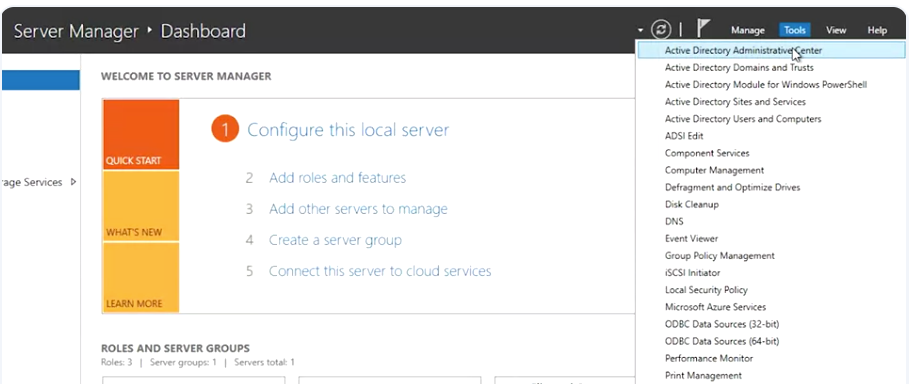
Active Directory Administrative Center (ADAC) - a tool that we’ll use for lots of everyday tasks
 Organizational units (OU): A hierarchical model of objects and containers that can contain objects or more organizational units
Forest: The hierarchy above a domain that contains multiple domains, allowing accounts to share resources between domains that are in the same forest
Domain controllers (DC): The service that hosts copies of the Active Directory database
- DCs also serve as DNS service to provide name resolution and service discovery to clients
- They provide central authentication through a network security protocol called Kerberos.
- Domain controllers get to decide when computers and users can log onto the domain.
- They also get to decide whether or not they have access to shared resources like file systems and printers
- Some changes to the AD database can only be safely made by one DC at a time. We task those changes to a single domain controller by granting it a flexible single master operations also known as Flexible single-master operations (FSMO): The single domain controller that has been tasked with making changes to the AD database that can only be made by one DC at a time For more information about Active Directory, check out the link here.