Cryptography in Action
TLS grants us three things:
- One, a secure communication line, which means data being transmitted is protected from potential eavesdroppers.
- Two, the ability to authenticate both parties communicating, through typically only the server is authenticated by the client.
- And three, the integrity of communications, meaning there are checks to ensure that messages aren’t lost or altered in transit.
TLS Handshake: A mechanism to initially establish a channel for an application to communicate with a service
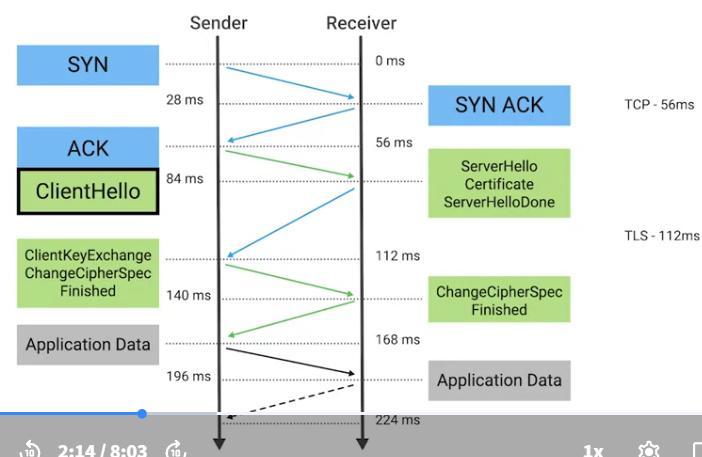
Session key: The shared symmetric encryption key using TLS sessions to encrypt data being sent back and forth
Forward secrecy: This is a property of a cryptographic system so that even in the event that the private key is compromised, the session keys are still safe
Secure Shell (SSH): A secure network protocol that uses encryption to allow access to a network service over unsecured networks
- It’s very important that remote login and Shell protocols use encryption. Otherwise, these services will be transmitting user names and passwords along with keystrokes and terminal output in plain text.
PGP (Pretty Good Privacy) encryption: An encryption application that allows authentication of data along with privacy from third parties relying upon asymmetric encryption to achieve this
- PGP was designed to use keys no smaller than 128 bit.
- PGP is widely regarded as very secure, with no known mechanisms to break the encryption via cryptographic or computational means