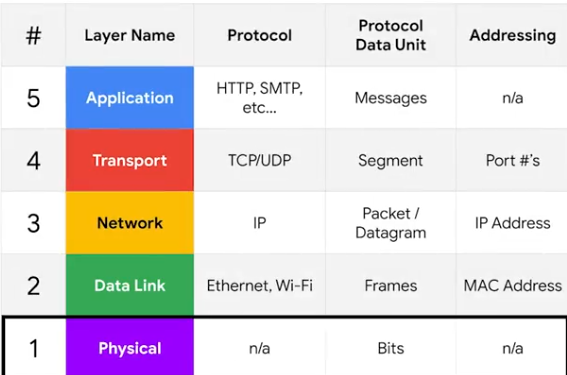
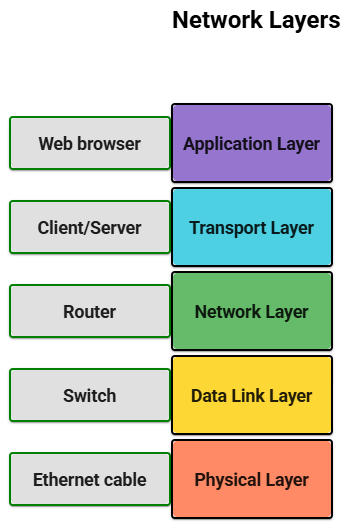
TCP and IP Five-Layer Network Model
- Physical Layer - represents the physical devices that interconnect computers
- specs for networking cables
- cables connecting them together
i.e. delivery truck and roads; wires, ports, NIC (Network Interface Controller)
- Data Link Layer (Network Interface or Network Access Layer) - responsible for defining a common way of interpreting these signals so network devices can communicate
- Ethernet Standards - define a protocol responsible for getting data to nodes on the same network or line i.e. how delivery trucks get from one intersection to the next; switching, switches, MAC address
- Network Layer (Internet Layer) - allows different networks to communicate with each other through devices known as routers
- Internetwork - collection of networks connected together through routers, the most famous of these being the Internet
- IP (Internet Protocol) - the heart of the Internet and most smaller networks around the world
*i.e. which roads need to be taken to get from A to B; routing, routers, IP address *
- Transport Layer - sorts of which client and server programs are supposed to get that data
*i.e. how the delivery driver knows how to knock on your door to deliver your package * 5. Application Layer - i.e. contents of the package itself; applications, browsers, websites