Network File Storage
FAT32 is a popular file system that’s compatible with Windows, Linux, and Mac OS’s, but it has severe limitations on the amount of data you can store on a volume
What happens if you have multiple users that want to share files between each other? Network file system (NFS): A protocol that enables files to be shared over a network
The easiest way to set up an NFS server is by using a Linux environment. You can install NFS server software, then modify the configuration files for the directories that you want to allow shared access to. Once you do that, the NFS service will be running in the background of the server. On each client machine that wants to access the server, you just mount the file system the way you would any other file system except, you’d use the host name instead of a physical disk device. From there, you can access the shared directory like you would any other folder on your computer.
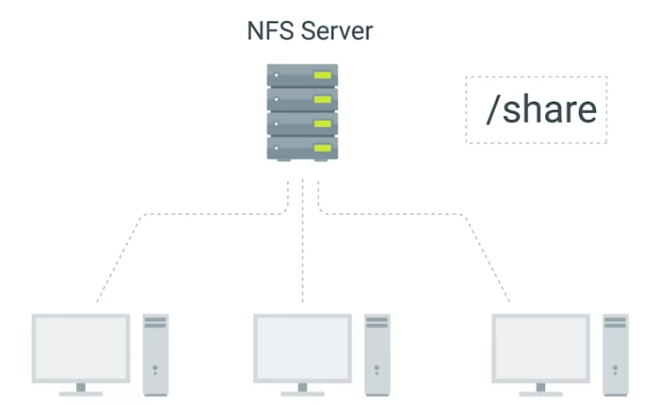 NFS is a good solution to file-sharing within a network. While NFS works with all major operating systems, they’re still interoperability issues with Windows.
If your fleet consists mostly Windows machines, you might want to look at using something like Samba. Samba services are similar to NFS. You can centrally share and manage file services. Also, all major operating systems can use a Samba file share.
- The only reason you might want to consider Samba over NFS is because it works better with Windows operating systems.
- It also includes other services that can be integrated with your organization, like printer services. One thing to note is that you may hear the term Samba or SMB. These two are different. SMB is a protocol that Samba implements. Fun fact; when you create a window shared folder, it’s actually using the SMB protocol. Samba itself is a software service suite used for file services.
A relatively affordable solution for file storage hardware is to use a network attached storage or NAS, pronounced NAS. Instead of setting up a dedicated server, like you would other services. NAS’s are computers that are optimized for file storage. They usually come with an operating system that strip down in order just to serve files over a network. They also come with lots of storage space.
For more information on SMB click here and for NFS server software click here.