Hashing Algorithms
MD5: A popular and widely used hash function designed in the early 1990s as a cryptographic hashing function
- It operates on a 512 bit blocks and generates 128 bit hash digest.
SHA1: It is part of the secure hash algorithm suite of functions, designed by the NSA and published in 1995
- another widely used cryptographic hashing functions used in popular protocols like TLS/SSL, PGP/SSH, and IPSec.
- SHA1 is also used in version control systems like Git, which uses hashes to identify revisions and ensure data integrity by detecting corruption or tampering
- SHA1 is part of the Secure Hash Algorithm suite of functions designed by the NSA and published in 1995.
- It operates a 512 bit blocks and generates 160 bit hash digest.
MIC (Message Integrity Check): It is essentially a hash digest of the message in question
- You can think of it as a checksum for the message, ensuring that the contents of the message weren’t modified in transit.
- It doesn’t use secret keys, which means the message isn’t authenticated. There’s nothing stopping an attacker from altering the message, recomputing the checksum, and modifying the MIC attached to the message
Password shouldn’t be stored in plain text because if your systems are compromised, passwords for other accounts are ultimate prize for the attacker.
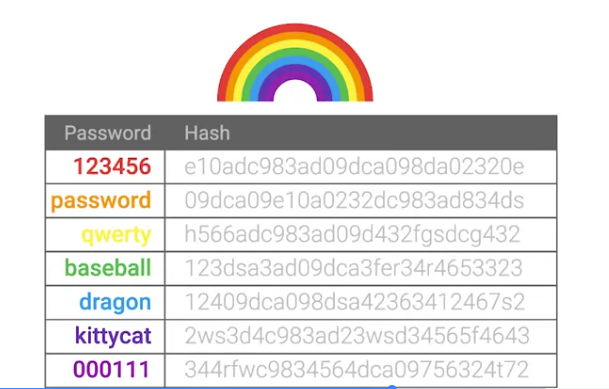
Rainbow tables: A pre-computed table of all possible password values and their corresponding hashes
- Rainbow table attacks: To trade computational power for disk space by pre-computing the hashes and storing them in a table
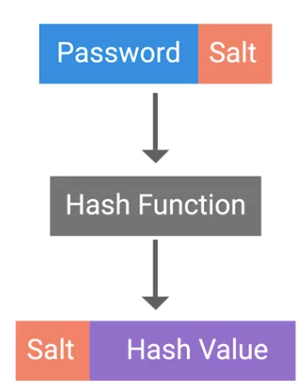
Password salt: Additional randomized data that’s added into the hashing function to generate the hash that’s unique to the password and salt combination