Explore how AI uses machine learning
An AI tool refers to AI-powered software that can automate or assist users with a variety of tasks
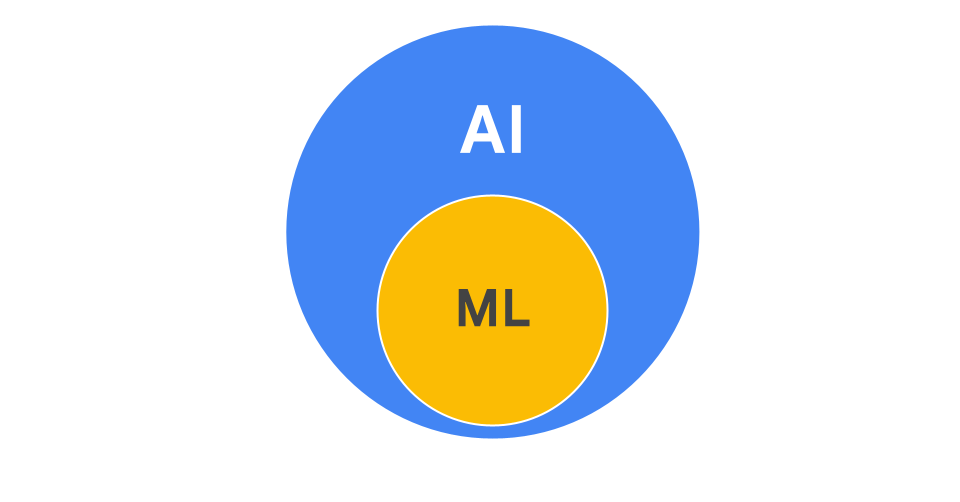
Machine learning, or ML, is a subset of AI focused on developing computer programs that can analyze data to make decisions or predictions. - ML is a specialized layer under the broader category of AI technology. - It’s often used by AI tools to make sense of data quickly and efficiently. - - AI designers build ML programs using a training set, which is a collection of data used to teach AI. - Basically, training sets provide ML programs with examples of what to expect and how to respond appropriately.
A fundamental issue to be aware of is the potential for bias within training data. This could unintentionally cause an AI tool to produce inaccurate or unintended outputs.
While both terms seem similar, ML is a subset of AI used by many of the tools available today.
Approaches to machine learning
There are three common ML approaches used to develop AI tools:
-
Supervised learning is used to train tools from a massive dataset that has been labeled by humans. This technique is often used when there is a specific, known output in mind. For example, an image generator is trained on millions of labeled pictures, like ones explicitly labeled “cat.” ML enables the tool to recognize the features, patterns, and characteristics of cats so that it can create custom, new images.
-
Unsupervised learning is used to train tools from a dataset that has not been labeled by humans. This technique is used to identify patterns and structures in data when there isn’t a specific, known output in mind. For example, an image generator analyzes a large dataset of animal photos. ML enables the tool to identify patterns on its own, clustering images with similar features like whiskers and pointy ears. This allows it to learn what a “cat” looks like without any human-provided labels.
-
Reinforcement learning is used to train tools through a process of trial-and-error that is guided by feedback. This technique is used to continuously refine and improve a tool’s performance on a specific task. For example, after an image generator creates a picture of a cat, it receives feedback from a human evaluator. If the feedback is positive, this signals that the output was successful. This feedback is collected and used by developers to help improve future versions of the AI tool.
Many of today’s AI tools use a combination of all three ML approaches to create text, images, video, and more. However, it’s important to note that the “learning” described in these approaches only happens during the tool’s development and training—before it’s released to the public. The feedback and data collected from users helps developers improve future versions of the tool, but the AI is not actively learning in real-time as you use it.
Rule-based AI: A different approach
While many modern AI tools are powered by machine learning, another common approach is rule-based AI. These tools operate using a set of hard-coded rules created by human developers and do not learn from new data. They follow their specific instructions precisely.
If you’d like to learn more, check out PAIR Explorables, a collection of interactive articles that can help you explore different AI concepts and experience how they work.