Cloud Computing Fundamentals
Cloud Computing
- The ability to rent computing services of all types (compute, storage, networking, database, machine learning, etc.)
- Available for use in only a few minutes
- Only pay for what you use
- No contract or long-term commitment
- Reduced up-front investment required
- Ongoing, monthly cost savings to the business (you)
- Vast catalog of computing services that you are able to use to serve your customers that wouldn’t otherwise be available to you
- With increased performance, availability and security to the end user
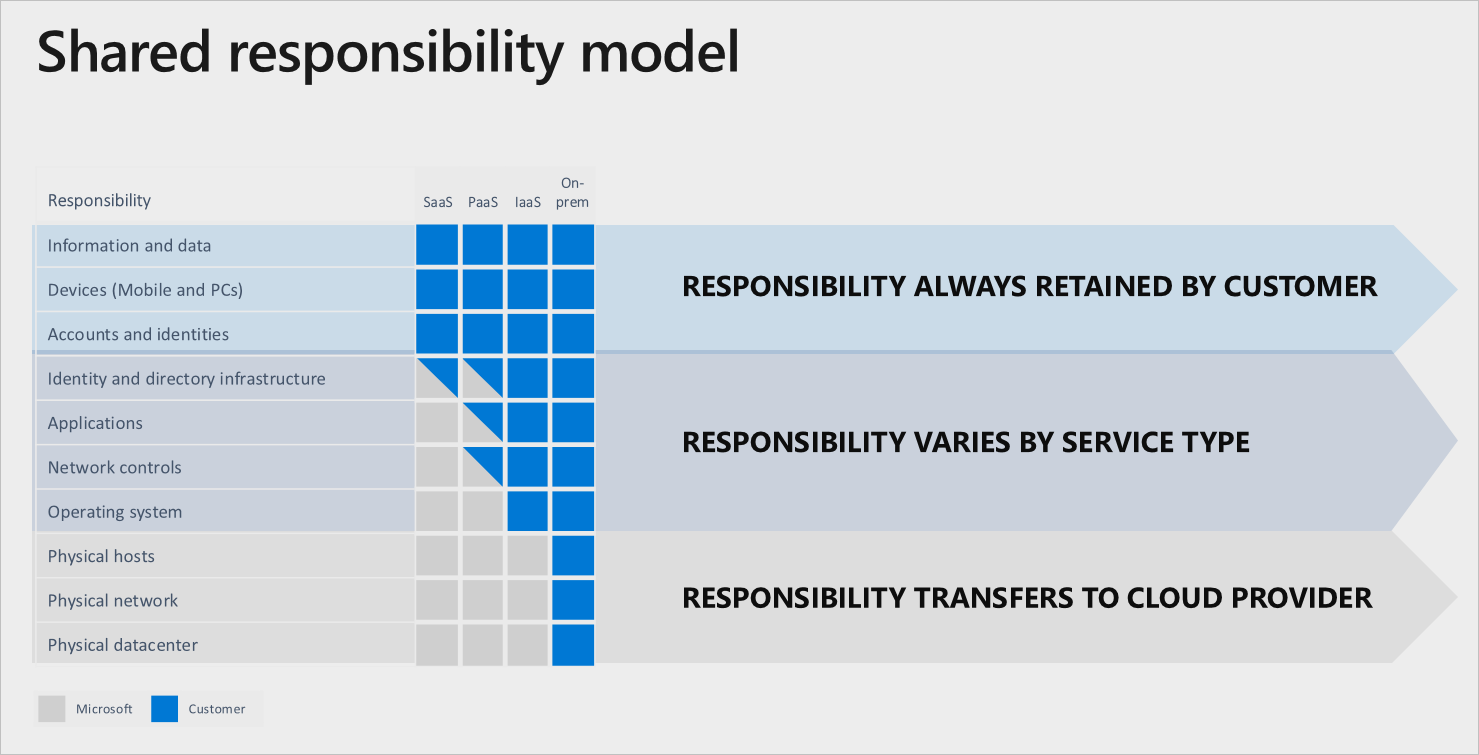
Shared Responsibility Model
Cloud Deployment Models
Public Cloud - Cloud services provided over the public Internet to anyone who wants to sign up for them. Azure owns the hardware, and you rent it from them
- Azure owns the hardware, on their network and infrastructure
Private Cloud - Cloud services are offered only to select users. This is sometimes called an “internal cloud”. Looks and acts like cloud computing, but uses resources and servers available only to your company/organization. You own the hardware or have exclusive use of it
- Looks and acts like a cloud, except the customer owns or leases or has exclusive access to the hardware
Hybrid Cloud - A mixture between your own private networks and servers, and using the public cloud for some things. Typically used to take advantage of the unlimited, inexpensive growth benefits of the public cloud.
- Combination of public and private clouds; scale private infrastructure to the cloud